PRODUCTION LINE
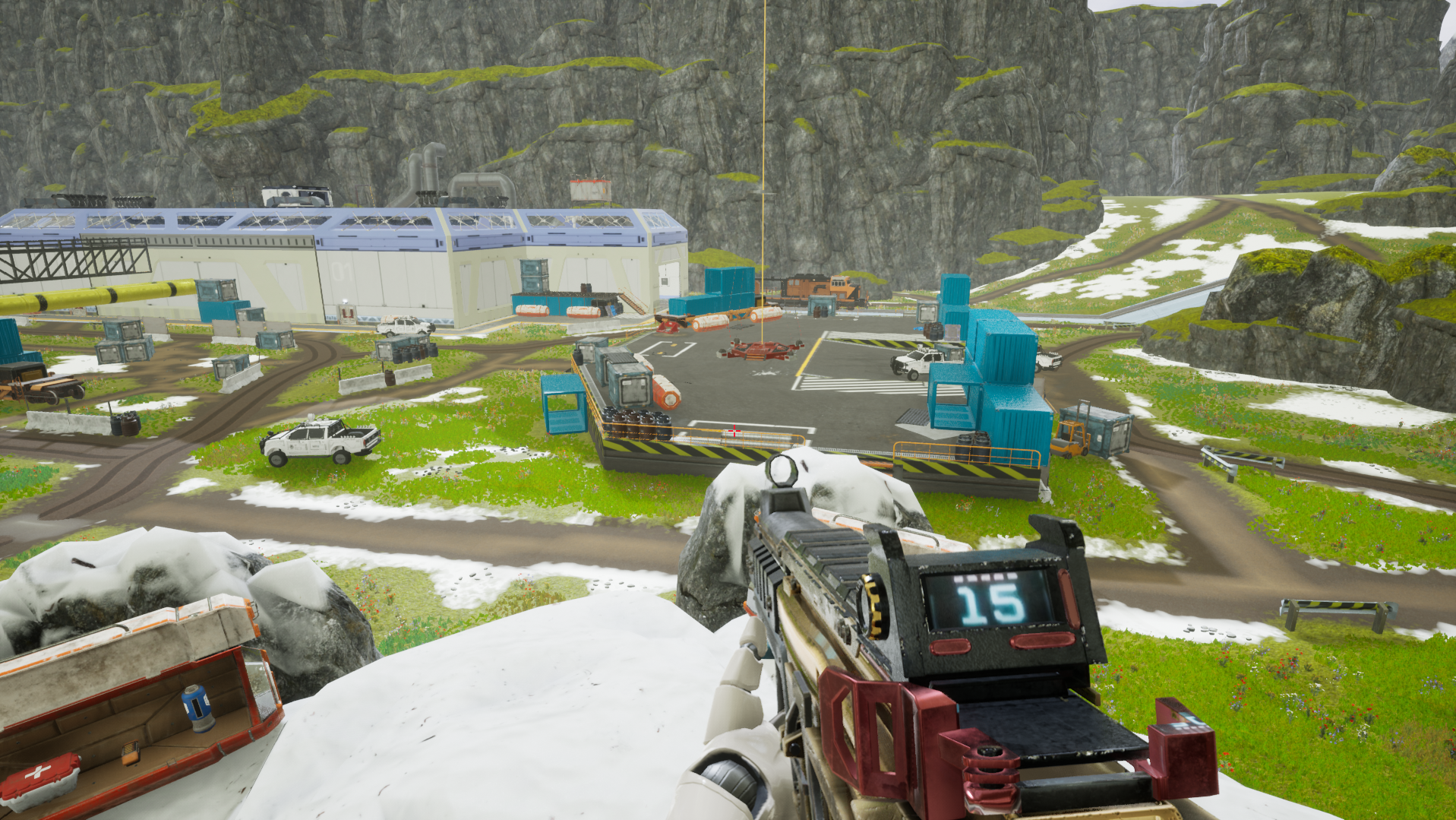
I thought it would be fun to make my own Point of Interest (POI) from Apex Legends since I played the game so much. I took inspiration from several of my squad’s favorite landing spots from back in the early seasons of Apex, from both King’s Canyon and World’s Edge before many of the changes that were made to those maps. I was interested in designing the building as a semi-symmetrical space, but I especially wanted to challenge myself to strike a balance between a large, wide open area and a smaller, more hectic building interior.
Responsibilities
- Designed the level from concept to final polish
- Programmed all logic and mechanics in the level
- Modeled and textured assets within the level
- Playtested level with friends and family
- Implemented lighting, post-processing, and art passes
Details
- Engine: Unreal Engine 4
- Language: Blueprints
- Duration: 2 Months
- Size: 1 Person
- Software: Blender, Perforce



Concept
This POI would be the place where the trains of World’s Edge were maintained. The mid-sized industrial space was used to work on a few trains at a time so they could be put back in circulation after the Legends damaged them during the Apex Games. However, the building zone is still recent and not yet complete as the area immediately surrounding the building itself is littered with crates and equipment.
Mechanics
I knew I wasn’t going to be able to implement actual multiplayer in this project, so what I wanted to focus on instead was fun traversal. Apex is known for its fast and fluid movement, and I set out to replicate that in my map, giving players options to zip around the exterior and in and out of the building.
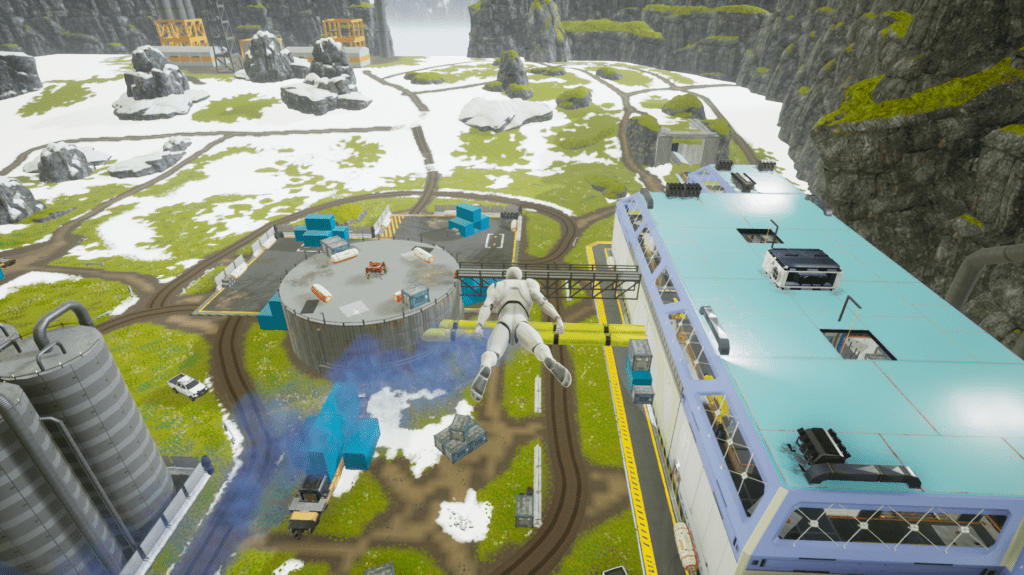
I recreated all the basic movement mechanics in the game (sorry, no bunny hopping!) and even tried to get them as close as I could to the measurements in the game. Players can walk, run, crouch, sprint, slide, jump, and even glide using the balloon. With this movement in mind, I made sure to have multiple avenues for players to either get into or out of a firefight, vertically or horizontally. I tried to place cover (at differing levels of protection) at intervals that felt fair for players to get to safety with enough space that attacking teams could reasonably down an enemy or two. I programmed everything myself.
Pre-Production

I already had an idea of the places I wanted to take from, so I started out by gathering images to give me a clearer picture of the direction I wanted to go with the POI. I also hopped into the game to get a better feel for the sightlines and building measurements. I also found the rough measurements for traversal online, such as how far a character can climb before falling. Some of my squad’s favorite landing spots were Market in King’s Canyon and Sorting Factory in World’s Edge, so most of the inspiration comes from those two, although there are small aspects of other POIs in my level. I knew I wanted to test myself on making an open, completely asymmetric area as well as a semi-symmetrical one; and it was important for me to achieve balance in the spaces, so that not one area dominated the other. After playing through the maps and studying their design, I took to paper to sketch out some rough ideas of what I wanted in terms of layout, flow, and sightlines.
Layout
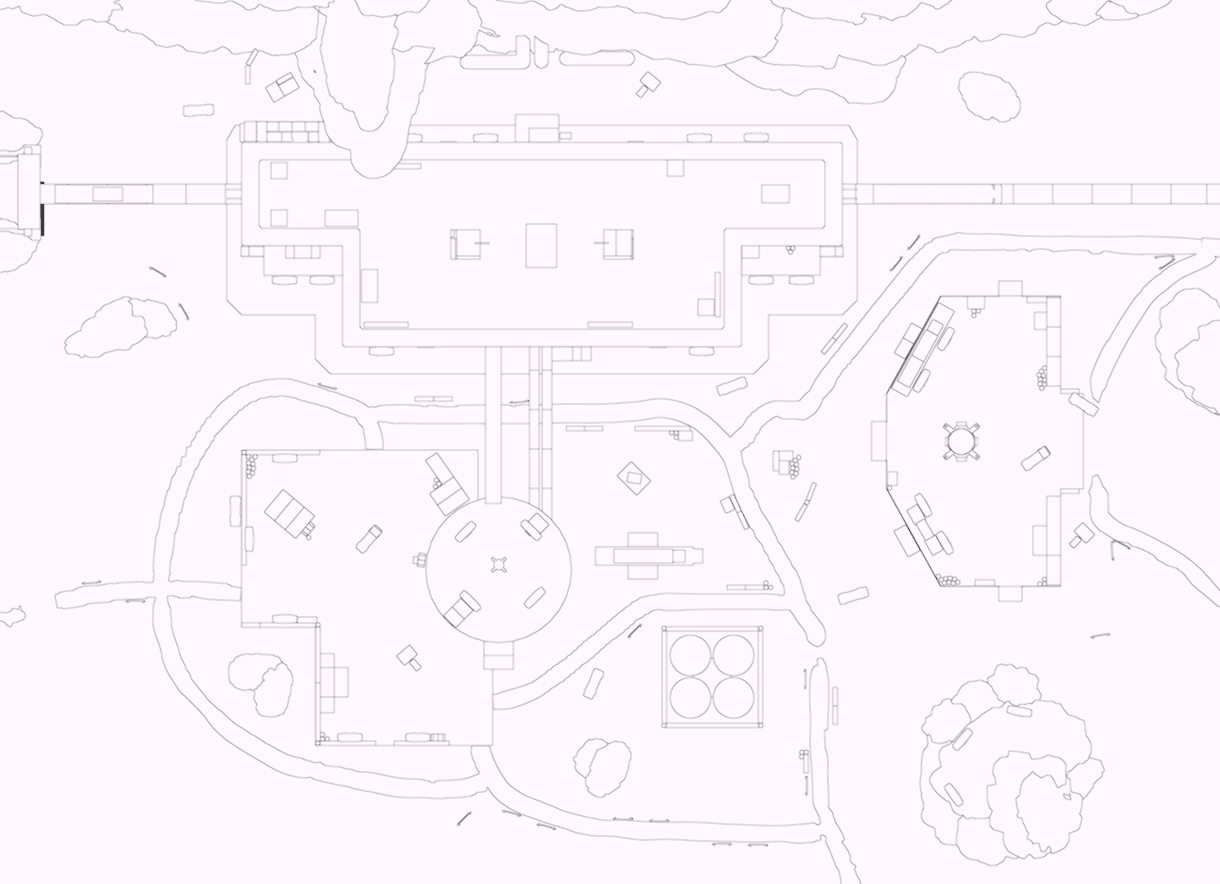
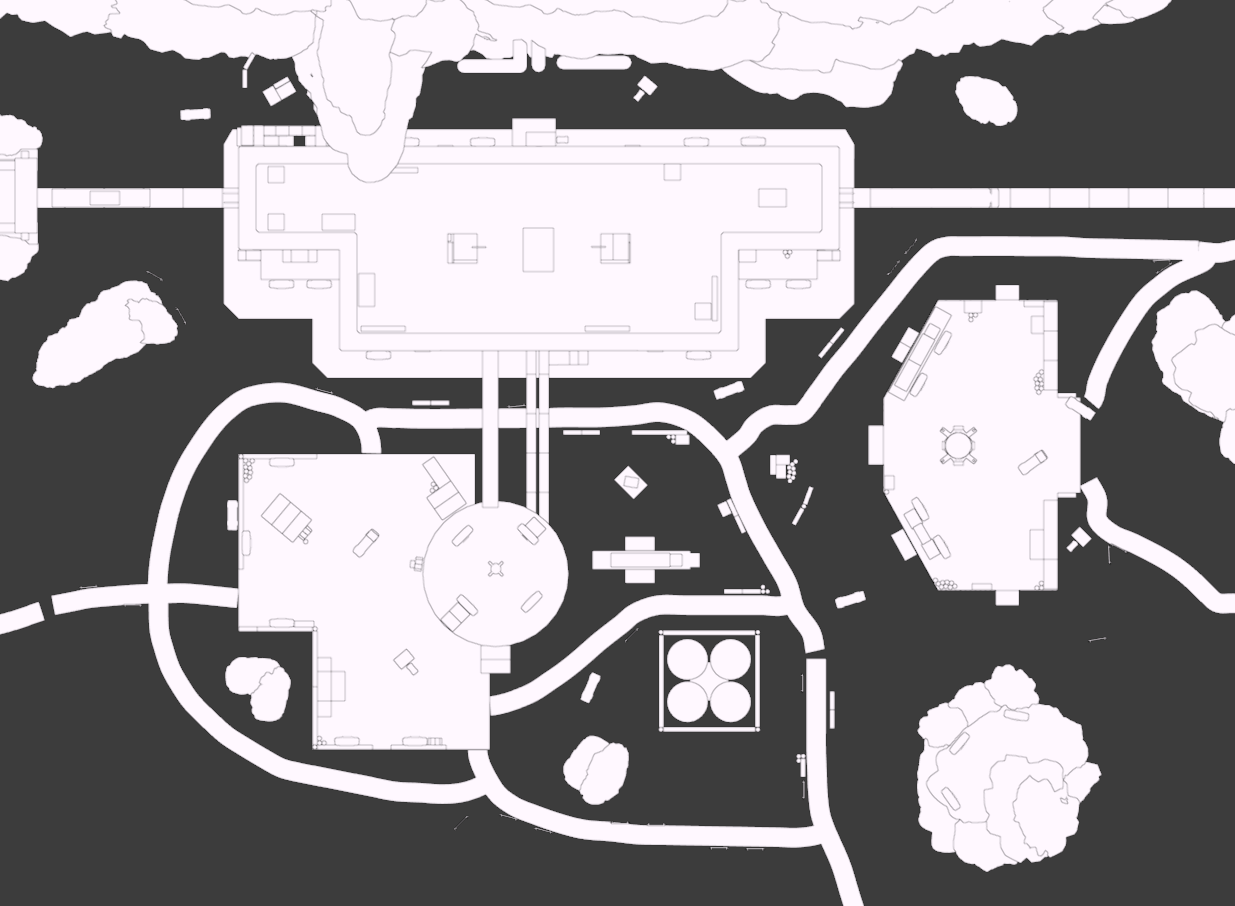
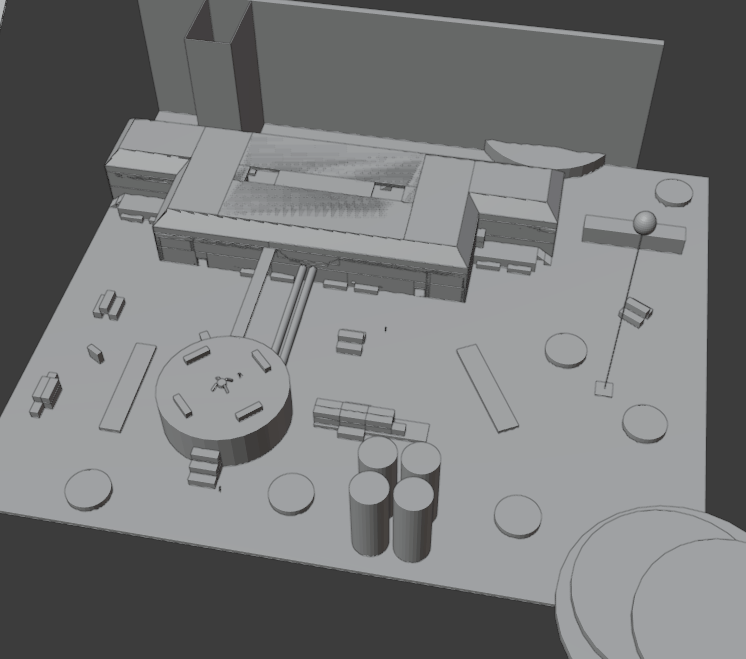
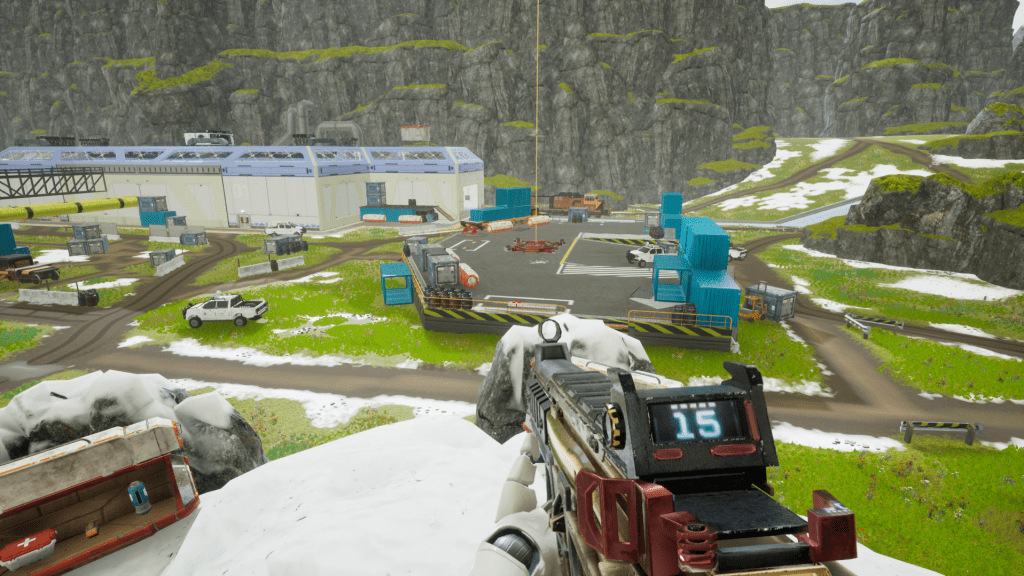
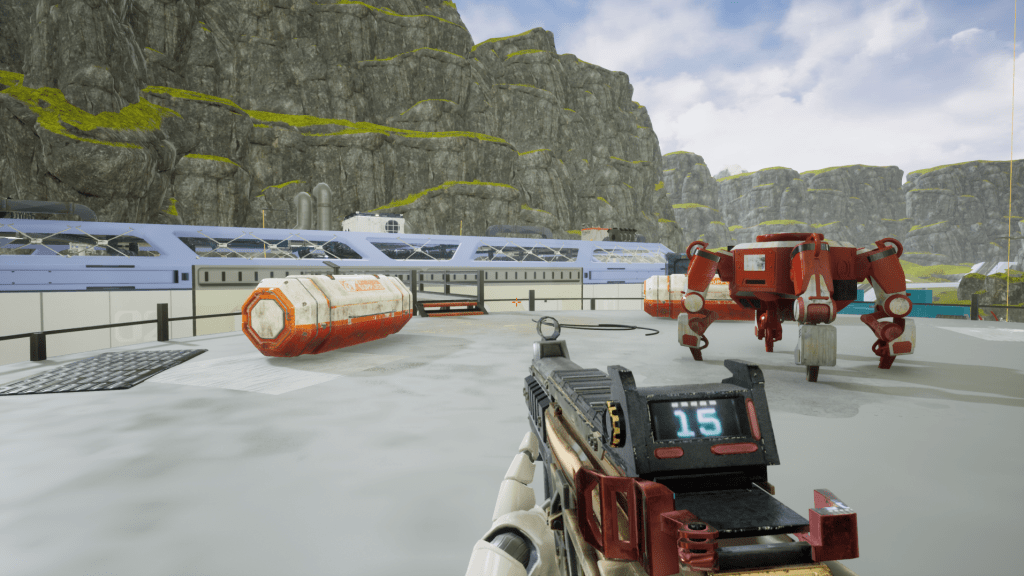
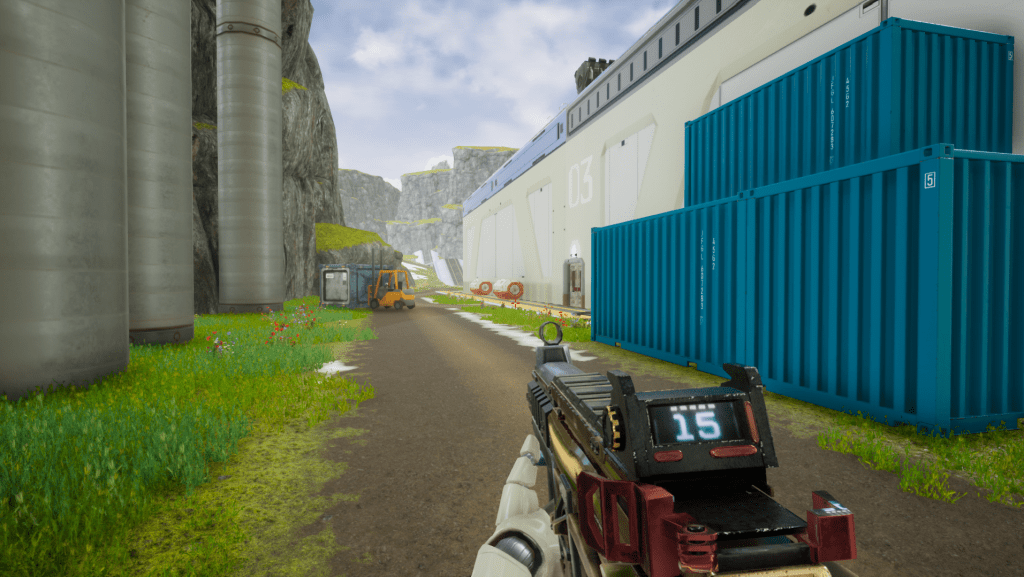
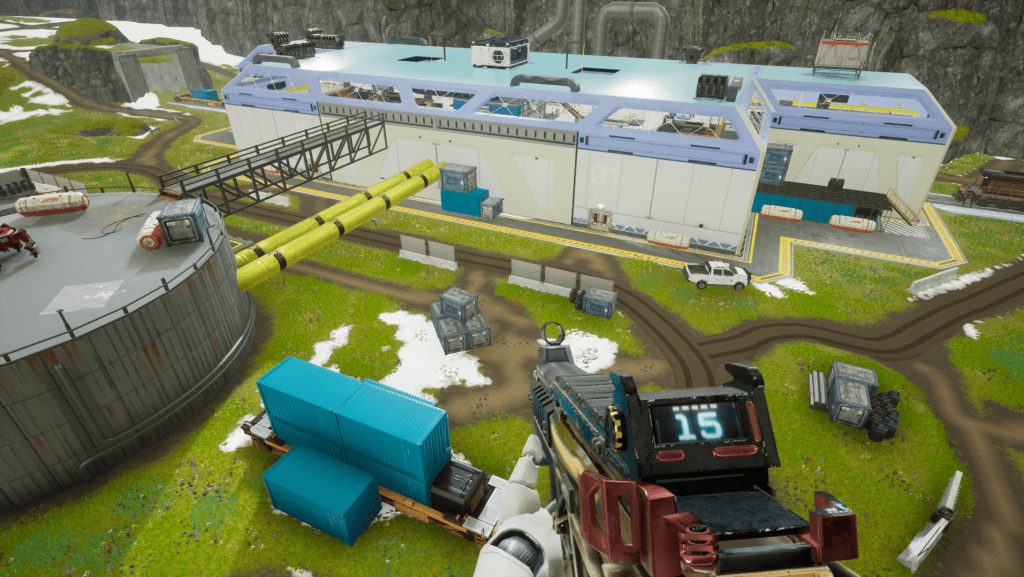
The map consists of a large main building, a work yard that contains a Respawn Beacon, and a Loading Dock that has a Redeploy Balloon. Rails lead into the POI, but trains themselves do not exit or enter the space. There is also a group of four silos near the middle of the POI; there isn’t anything special about them, but they are the highest spot in the POI, so a determined sniper could poke at other teams if they wanted. There is a good amount of cover, but players on the roof of the main building could easily pick off players who aren’t careful. Players on the building have to also be careful, as there are many ways to enter and attack the building.
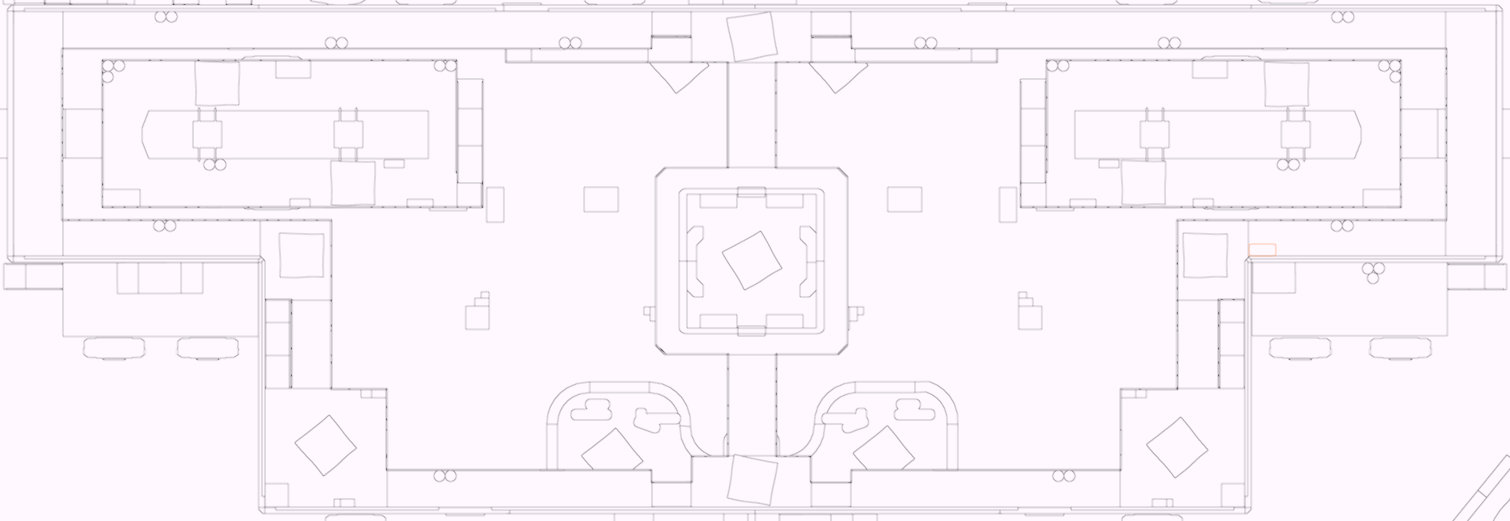

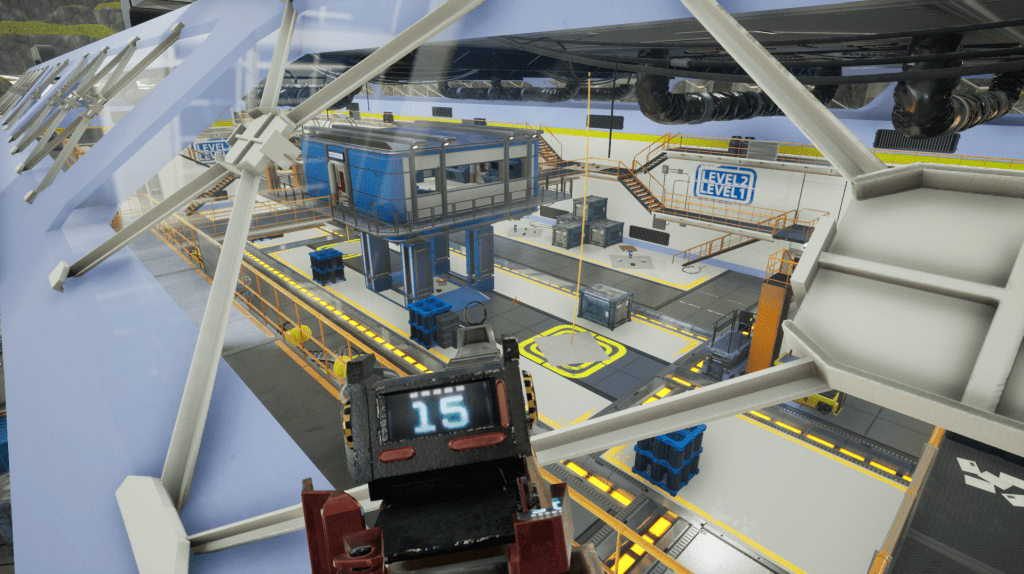
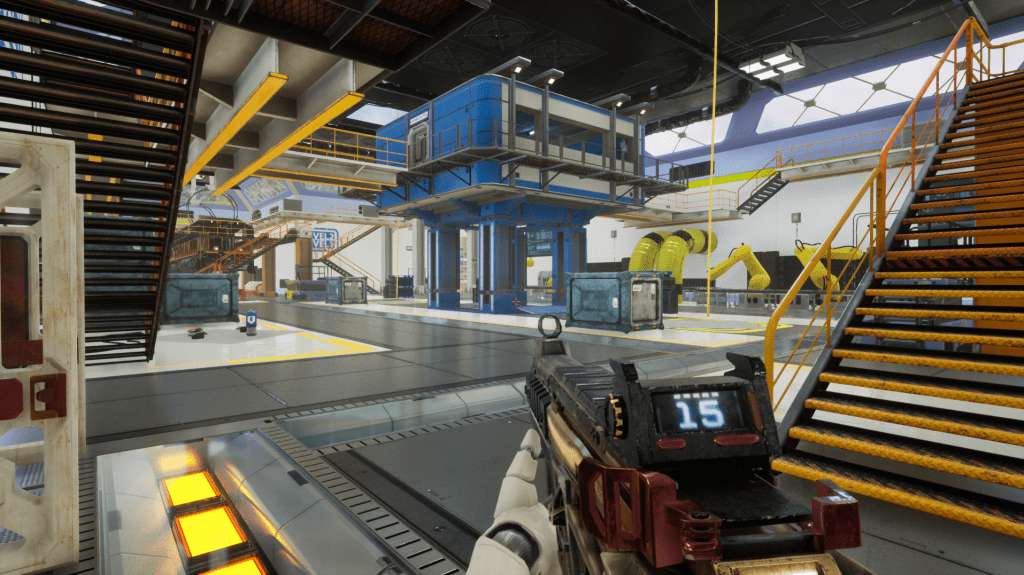
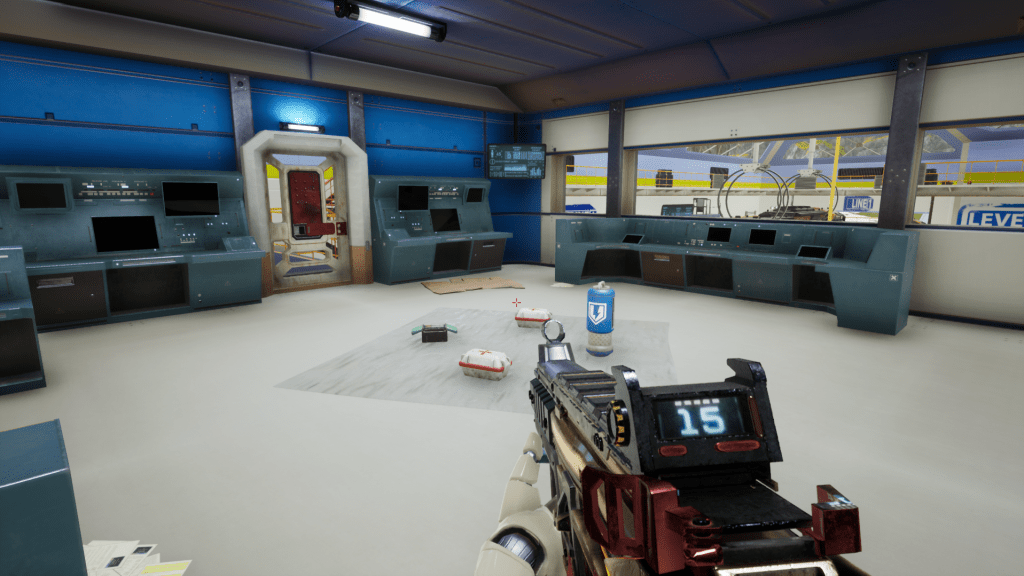
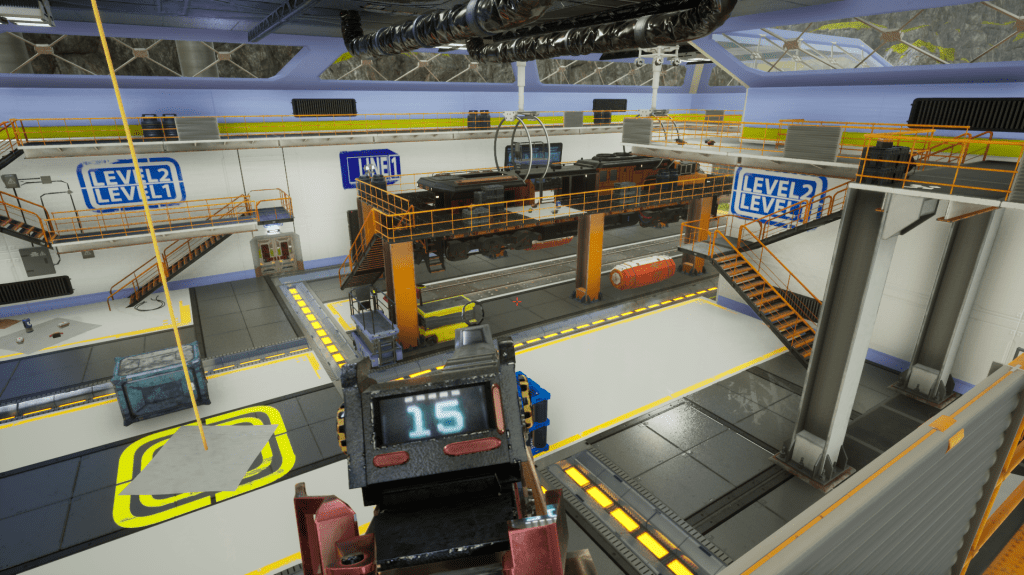
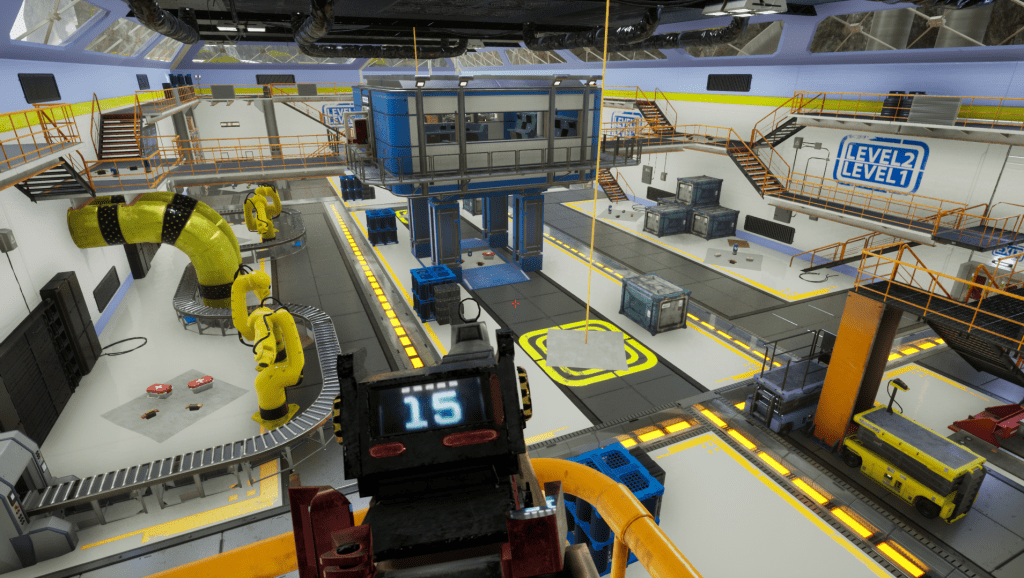
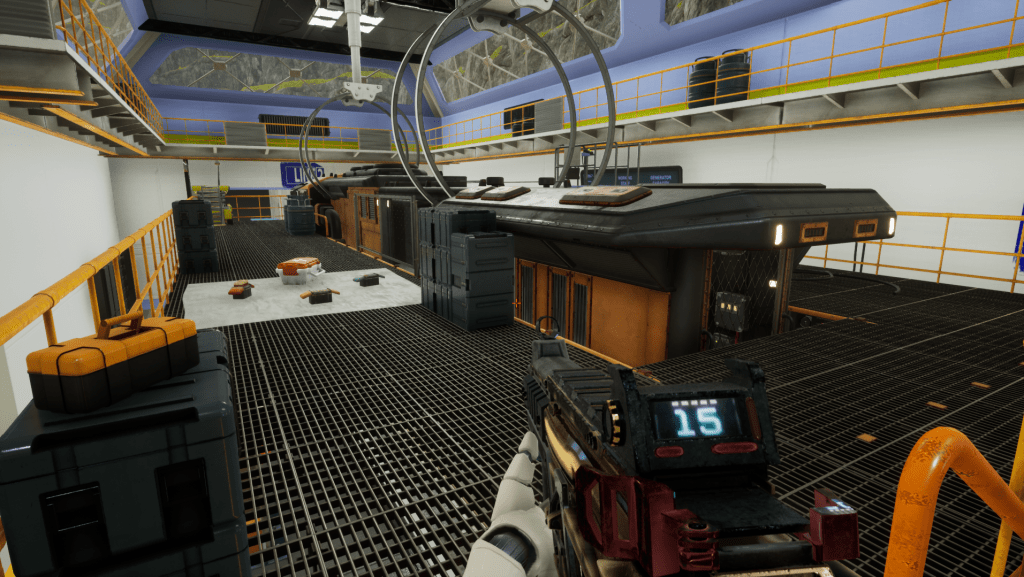
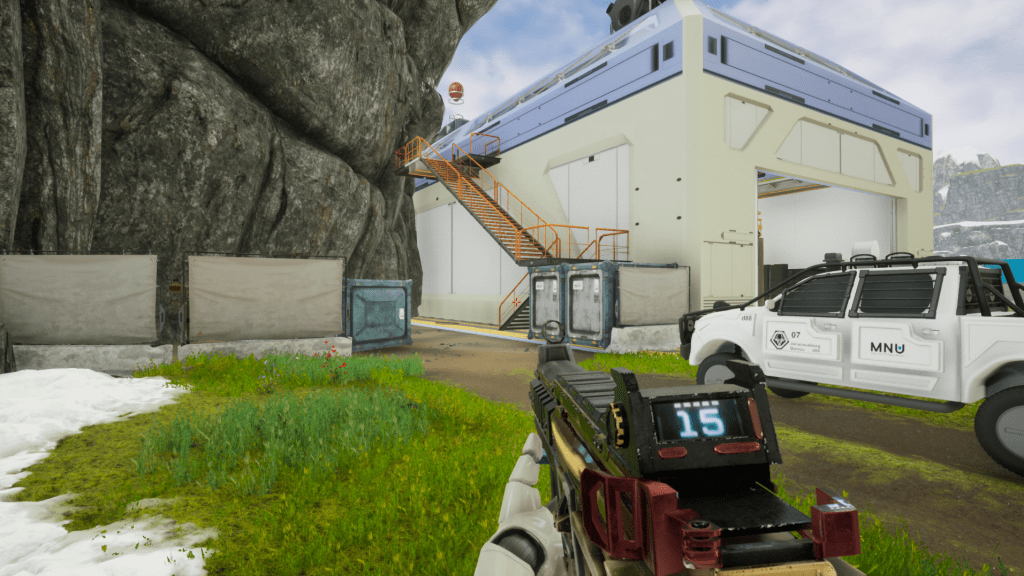
The interior of the building is mirrored on the y-axis, with two levels to traverse between. In the center is a control tower that houses the most valuable loot, and while players could bunker down in here, it could also very easily become a deathtrap. The second floor consists of catwalks which can provide a strong position, but are small to maneuver in and can get them downed if not careful. The first floor has more cover, but is larger and easier to get attacked from above. On either side of the control tower is a zipline that will bring the player to the roof. A train under maintenance sits on a raised platform on each side of the building. The building has two large open doors in front of the trains, two double doors at the front, two double doors at the back, and two open areas on the roof. There are multiple avenues onto the building, and the roof has windows so players can see inside/outside.

The outside has a decent amount of loot, though of course, there is no guarantee what is in the crates will be desirable. The building, however, has a considerable amount of loot for players to fight over.
Blockout
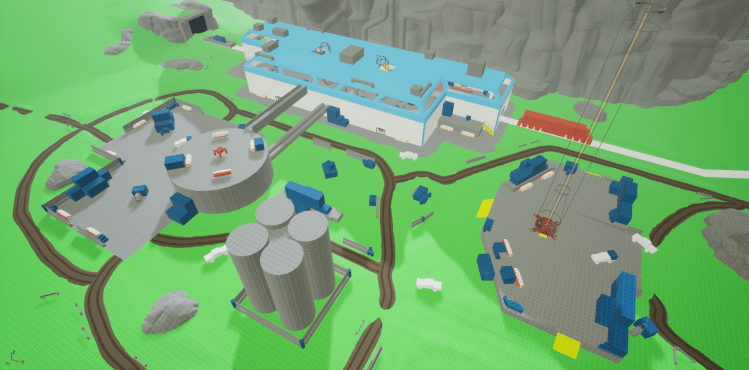
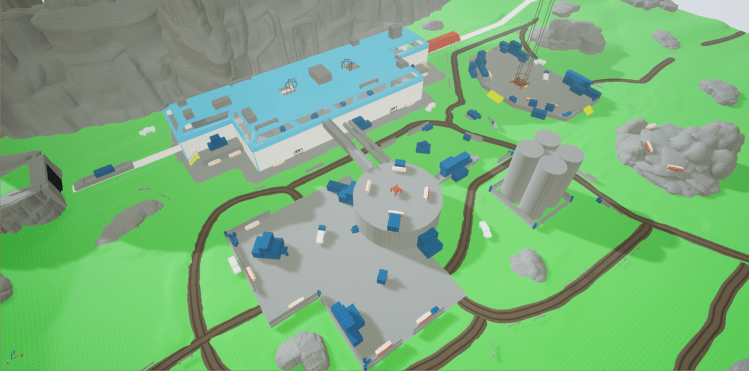
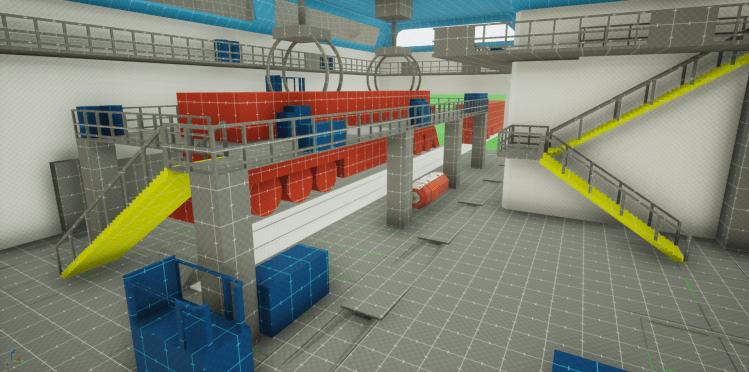
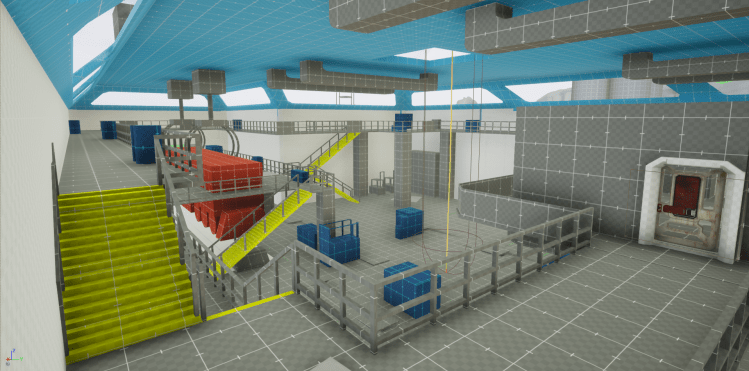
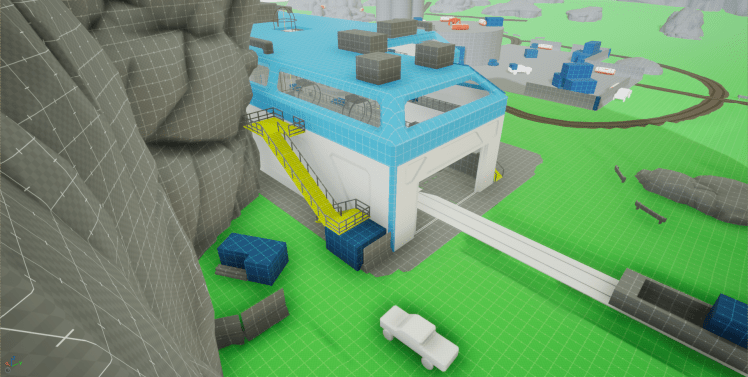

The above is from the final blockout I made, although the map went through several iterations before settling on a layout that worked well. I do my blockouts in Blender and then export them to Unreal to play around in. As seen below, the main building was actually a completely different shape when I first started and the outside was configured differently as well. I wasn’t testing a true multiplayer firefight, but I did try to have my playtesters imagine how they would move and attack dummies I put in the level. My playtesters (who played Apex Legends) did have feedback on the traversal of the interior, so I set out to fix this problem in my design.
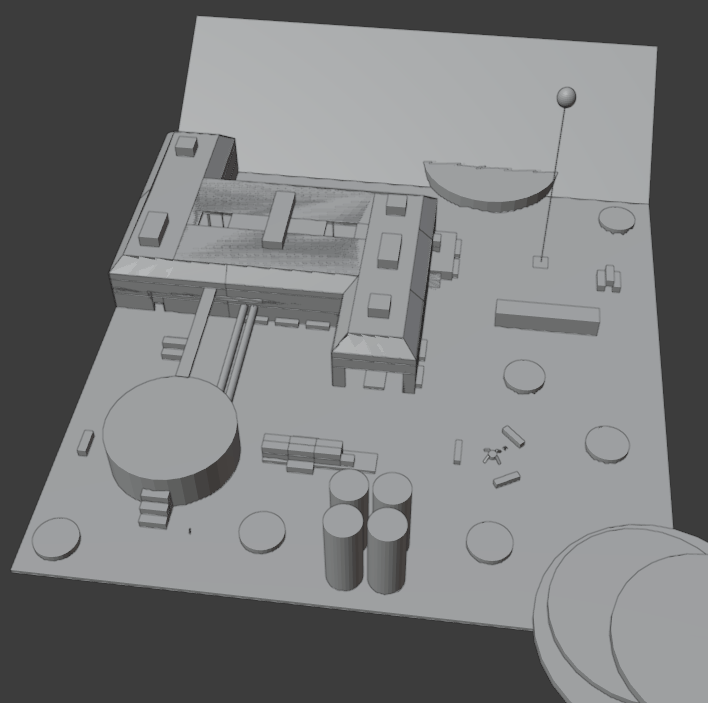
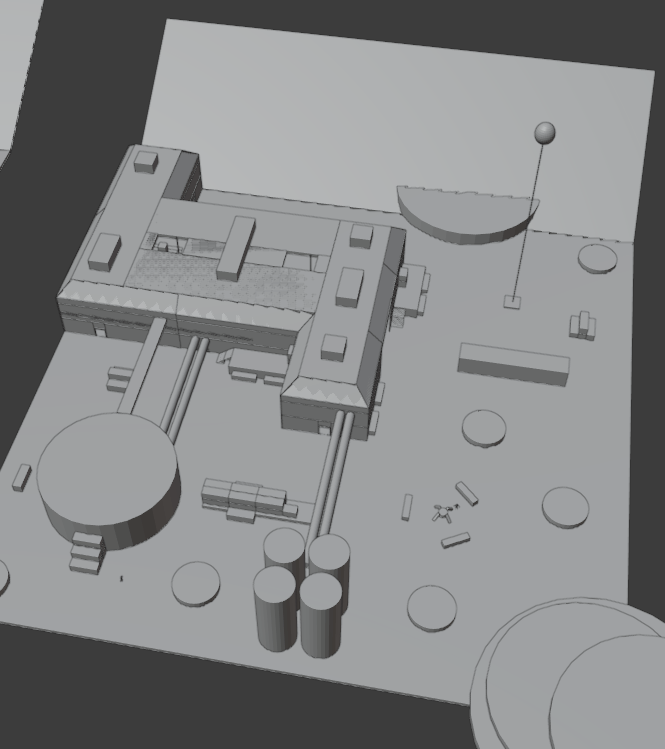

While the previous shape of the building was more interesting to me, it led to an awkward and cramped configuration in the interior. The focus was more on the conveyer belts that ran through the building, so I changed the building to be a more basic shape that housed the trains better and relegated the conveyer belt to a much smaller section of the building. With the building changed, I needed to rearranged the outside as well, so I put more around the Balloon and Respawn Beacon as sort of “hubs” for players to congregate and fight.
Polish
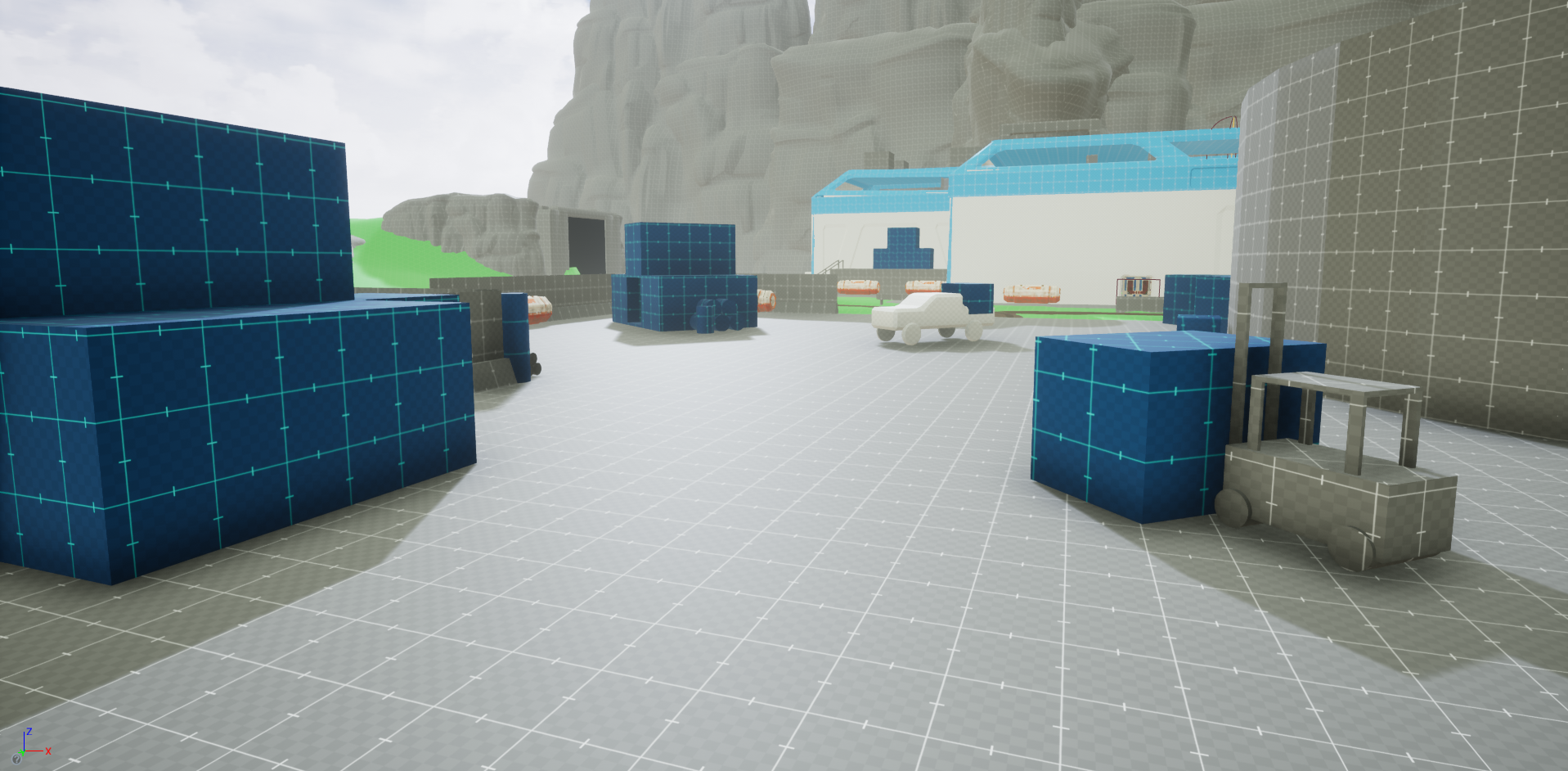

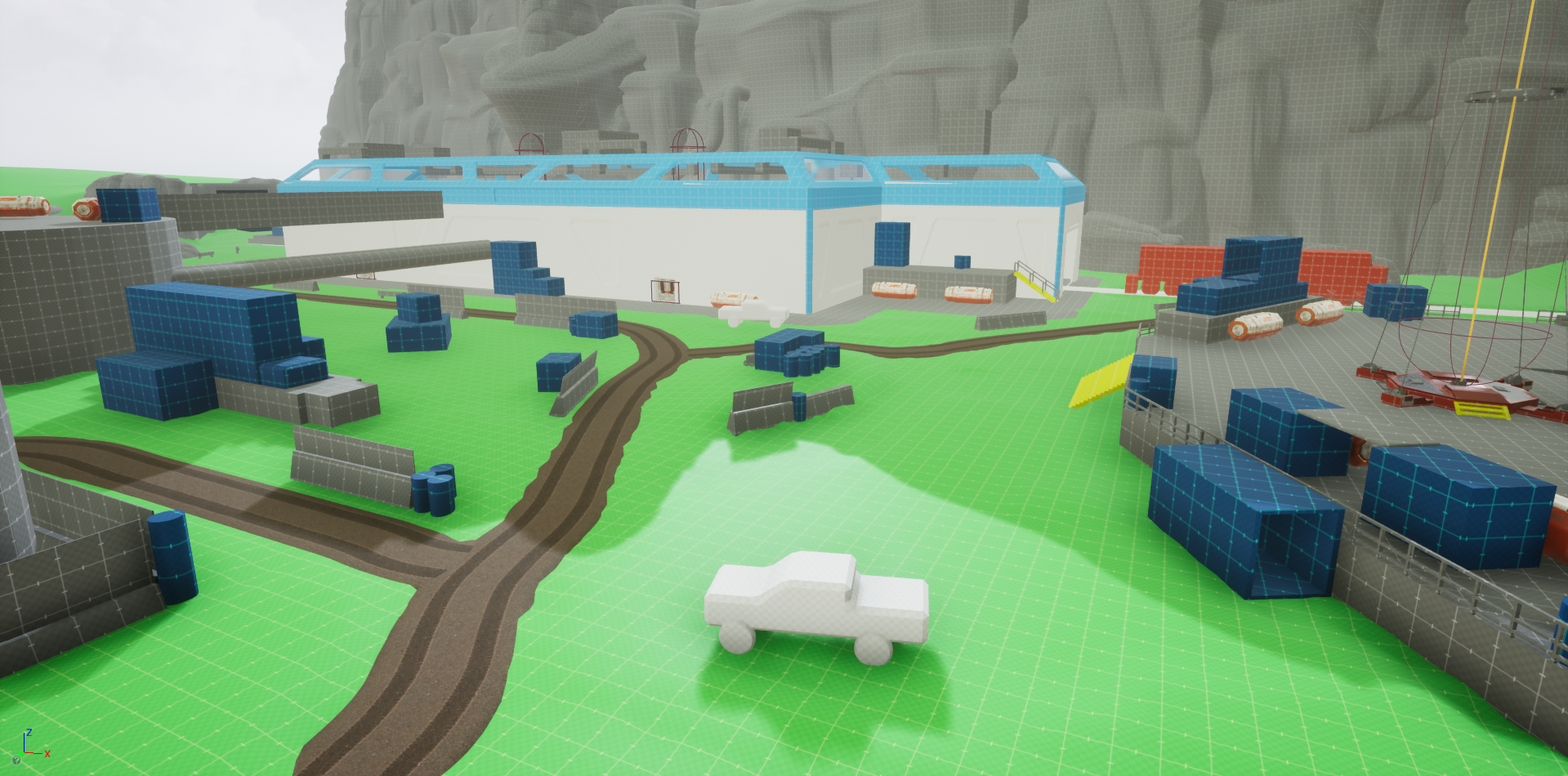
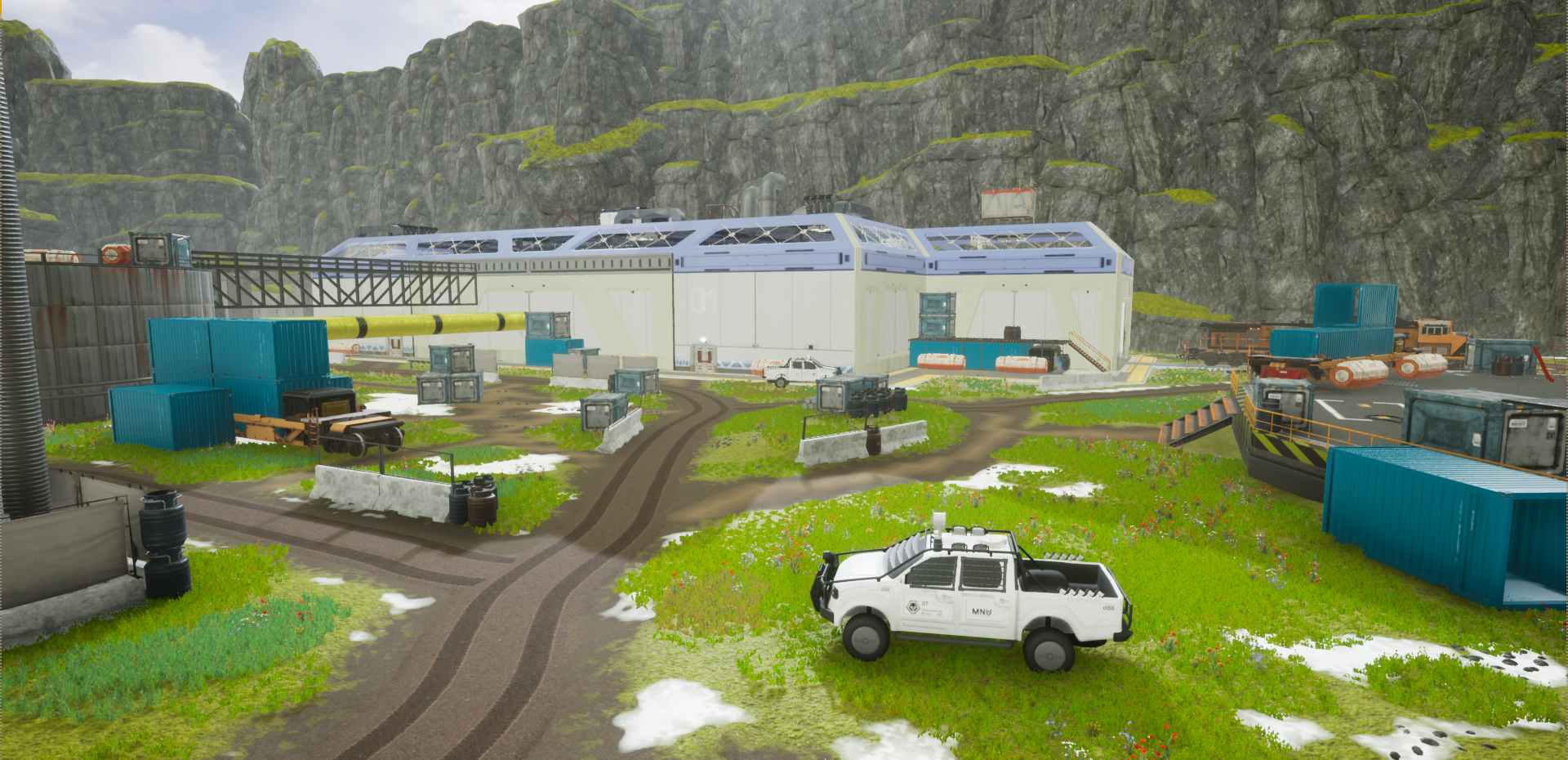
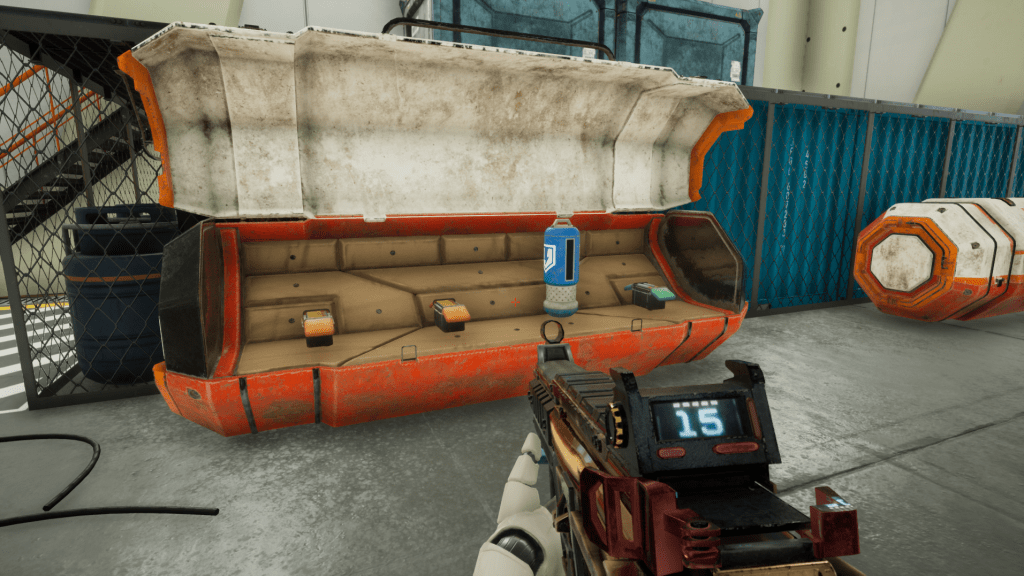
I actually did the final polish much later than the initial blockout, which is why I decided to use the white/blue colors you would find in later versions of World’s Edge. I was able to find a few fan-made assets from the game, which is how I got the wonderful R-99, Loot Crate, Respawn Beacon, and shields/medkit/ammo models. I had to custom model and texture the exterior pieces of the building as well as the doors myself, but everything else I was able to find or I already owned. All in all, the design came through except in one regard. I ended up changing the trains only because I didn’t have the specific asset (or the time to make it) from the game. In my original concept, the train outside the building as well as the ones inside would have had an open interior space players could move through and take cover in, almost acting like mini rooms within the building. Unfortunately, this idea doesn’t come through in the final build, since I had to close off the open section of the train models as it was too easy to get stuck in them.


 Patrick Lancaster