
MIDGARD STRONGHOLD
I was inspired by the beautiful levels of God of War (2018) and wanted to create one of my own; but I also wanted to work on my puzzle design, so I created a few puzzles using the Leviathan Axe’s freezing and throwing mechanics. I set out to capture a natural sense of progression between the puzzle and the mechanics, as well as a good balance of the gameplay between exploration, combat, and puzzles.
Responsibilities
- Designed the level from concept to final polish
- Programmed all logic and mechanics in the level
- Designed multiple puzzles within the level
- Playtested level with friends and family
- Implemented lighting, post-processing, and art passes
Details
- Engine: Unreal Engine 4
- Language: Blueprints
- Duration: 3 Months
- Size: 1 Person
- Software: Blender, Perforce



Concept
After the World Serpent displaced the water in the Lake of Nine, Kratos decides to explore one of the areas that opened up, and discovers a cliffside fortress. What was once a lively village now lies abandoned, with remnants of past activity in the surrounding forest and mountain cave. The area seems to hold promising treasure but is also rife with Draugr, Reavers, and Hel-Walkers, not to mention whatever now resides in the old fortress…
Mechanics
The two core mechanics the level was meant to support were the axe’s throwing (and returning) and freezing mechanics. I designed the puzzles with these in mind and tried to create a good sense of progression between the puzzles, ramping up their complexity to make the player think in different ways. I made this level before God of War: Ragnarok was released so I didn’t take into account any of the traversal or mechanics introduced in that game.
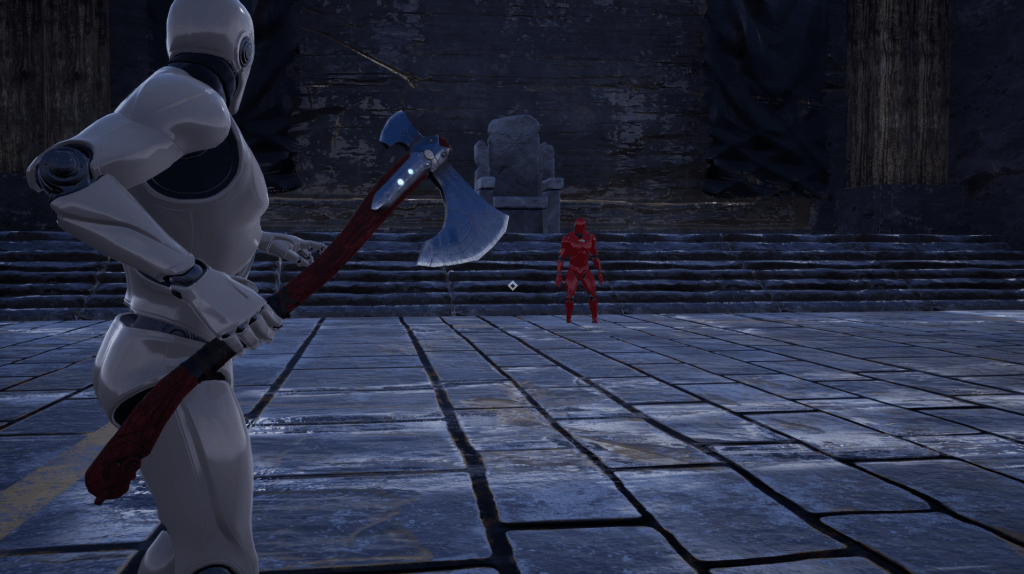
I recreated the Leviathan Axe’s throwing and returning, as well as freezing certain objects (gears and enemies). Kratos can walk, sprint, and aim and sheathe the axe. He can also jump, mantle, and climb like in the game as well as push blocks and operate the levers that open the gates/move the elevator. I programmed everything myself.
Pre-Production
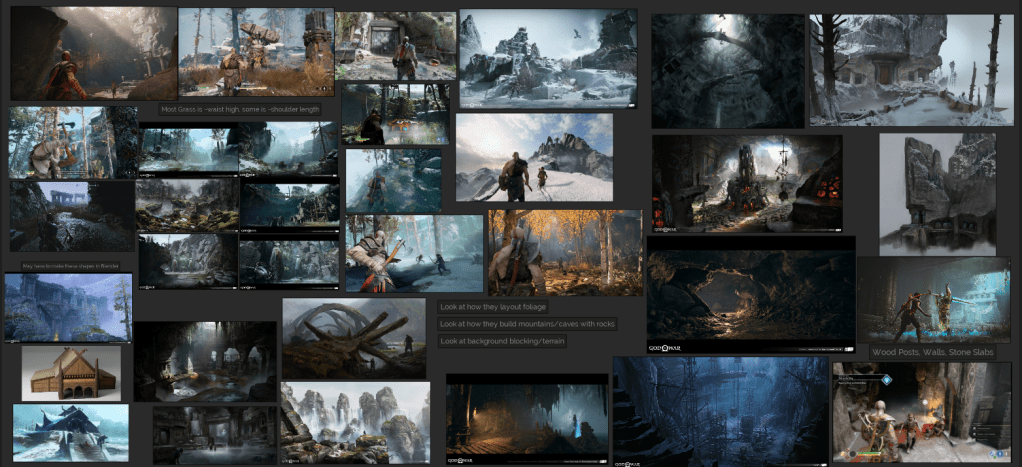
I started out by gathering images to give me a clearer picture of the direction I wanted to go with the level. I also hopped into the game and played through some of the sections to give myself a better feel of how to recreate the space I was going for. Specifically, I wanted to create one of the larger, named side areas around the Lake of Nine, and so I took a lot of inspiration from those areas. (Veithurgard and Konunsgard) After playing through the levels and studying their design, I took to paper to sketch out some rough ideas of what I wanted in terms of layout, flow, and puzzle logic.
Layout

The map is generally split into three sections: Forest, Cave, and Cliff, with each one being distinct from the others visually and in terms of enemies. As I learned in this GDC talk on the Level Design of God of War (2018), I wanted to properly balance the flow of the level between combat scenarios, puzzles, and exploration, as diagramed in the above picture. (Please note the collectibles could range from hacksilver to health/rage stones to Jotnar Shrines.)
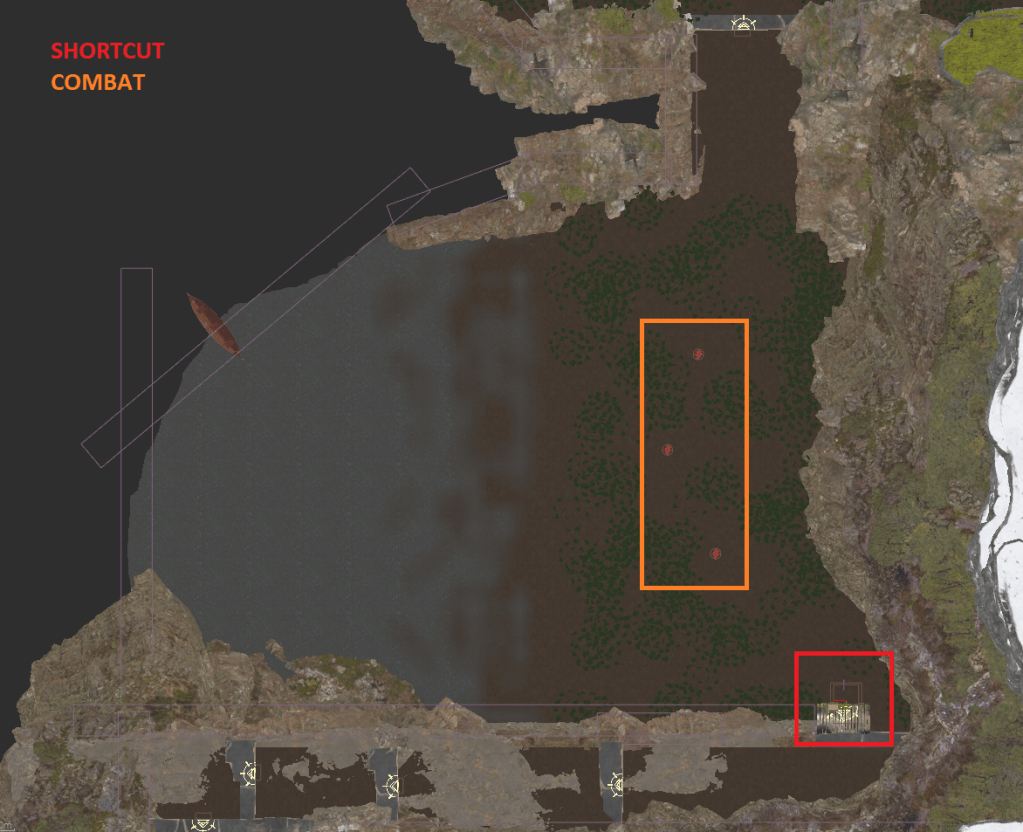
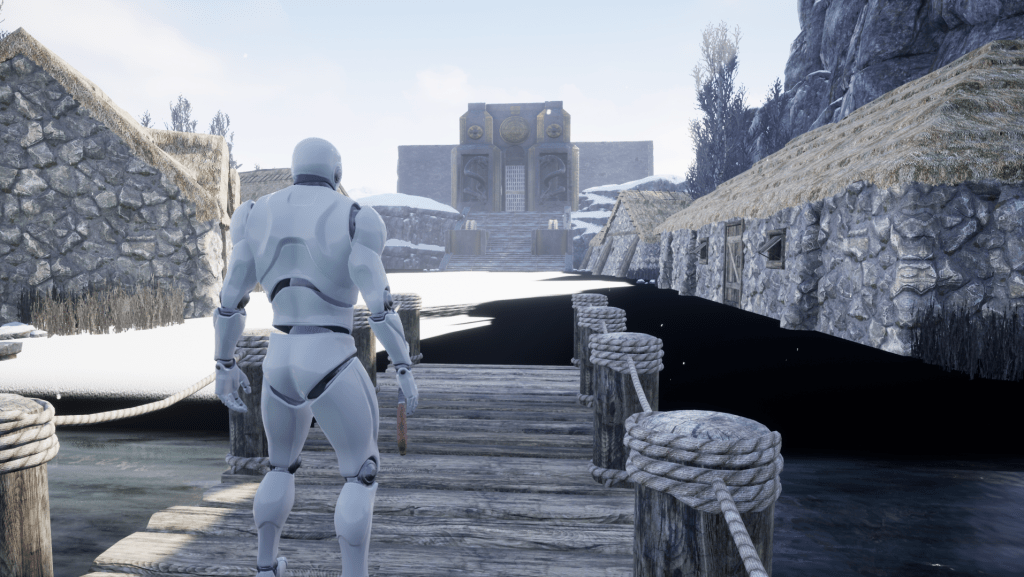
The level starts out on a beach area. To the right is the goal of the level, the Stronghold; and although the cliffs are too high to reach it, there is a climbable chain that the player can turn into a shortcut. To the left is the path ahead, but before reaching it, the player runs into their first combat encounter, with simple enemies to warm the player up. (For my players, it allowed them to learn the axe throwing and freezing mechanic.)

The forest area starts with an open space that includes a merchant (Brok/Sindri) players could use to upgrade, buy, etc. Past the merchant is the way forward, but there is also another climbable chain shortcut the player can access later, and a plateau area with a chest that allows the player to see the way forward. Combat in this “zone” consists of Reavers with Seidr magic, ramping up in numbers and strength as the player moves through. The puzzle is simple, but meant as a way to teach the player about operating gates and then freezing the gears they use. They must open the gate, freeze the gear, and then return the axe to open the other gate. At the end of the zone, they can create a shortcut back to the merchant.
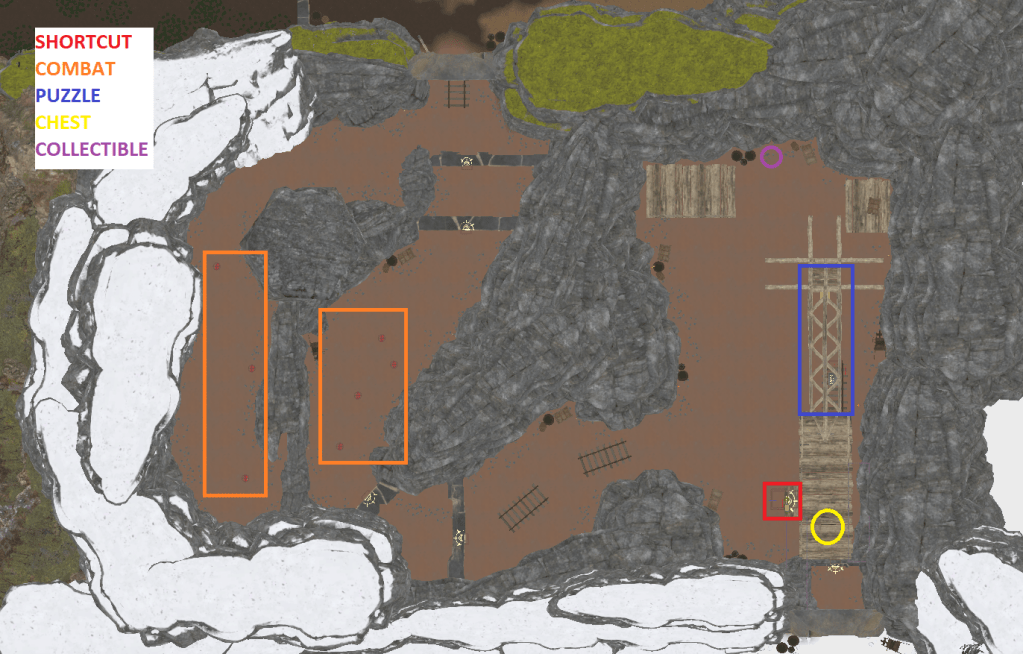
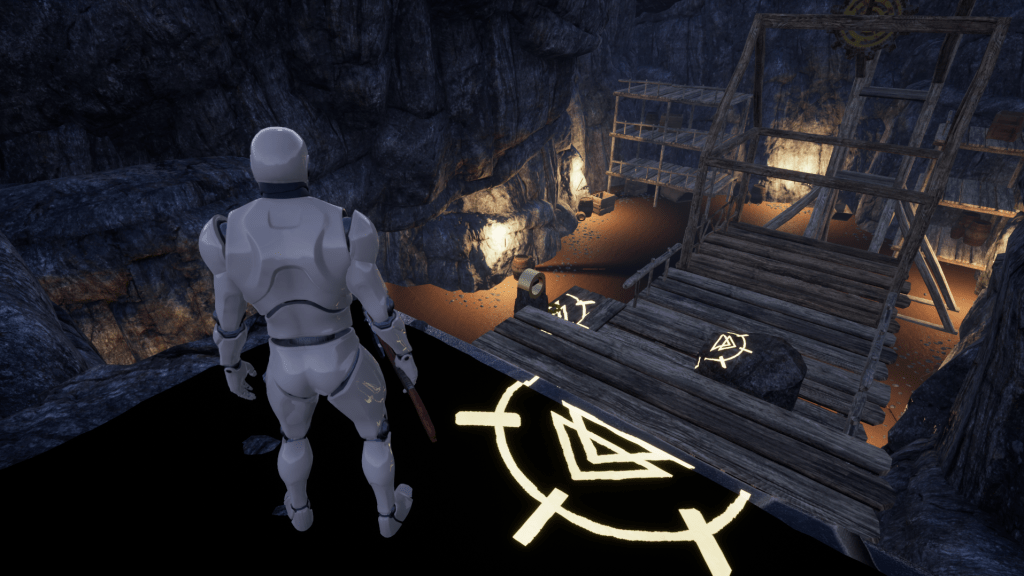
The cave section is smaller than the forest with one large combat section involving Draugr with fire damage and one puzzle. The player can choose either path to move forward, but they will be attacked by melee units, while ranged units pelt them from afar. In the next room, they will see a large crane and the exit. The puzzle is two-fold: players need to push a block onto the crane’s elevator to reach the exit by freezing the elevator at the bottom, getting on with the block, and returning the axe to go up. There is also a chest here that requires the player to maneuver the block and the elevator to be able to reach it. There is a shortcut chain at the top if players mess up the order.
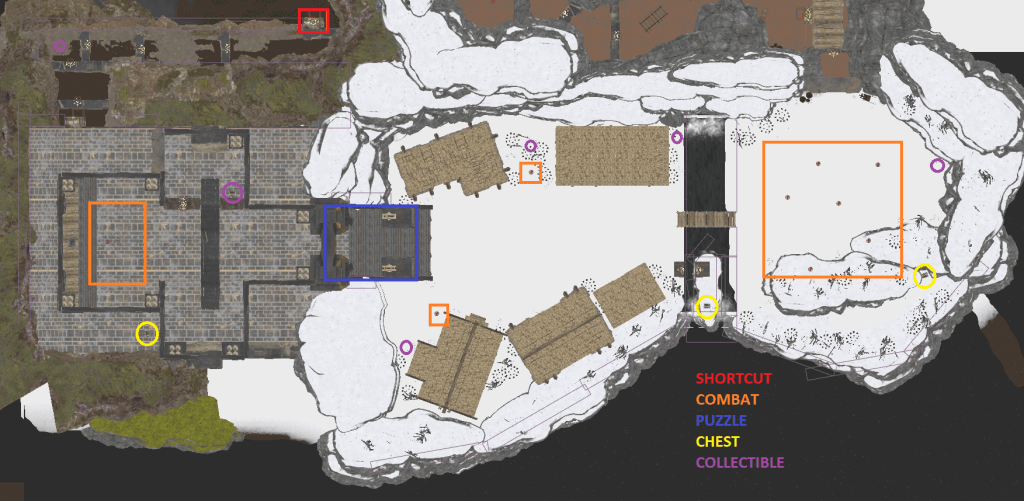
The final zone is the cliffside village which houses the Stronghold and the mini-boss enemy inside, featuring Hel-Walker enemies in the village. When the player exits the cave, they will enter the largest combat encounter yet. In the village are two low level enemies that would rush the player. Again the puzzle is two-fold: players must operate a gate and a door bar, moving them in a specific order so they can enter the Stronghold. Inside is a mini-boss, perhaps a Traveler, Ogre, or Troll that would drop a special crafting resource on death that the player could then use in a unique upgrade. Exiting the Stronghold, players can create the shortcut back to the beach they started at and go talk to the merchant to receive their new upgrade.
Blockout

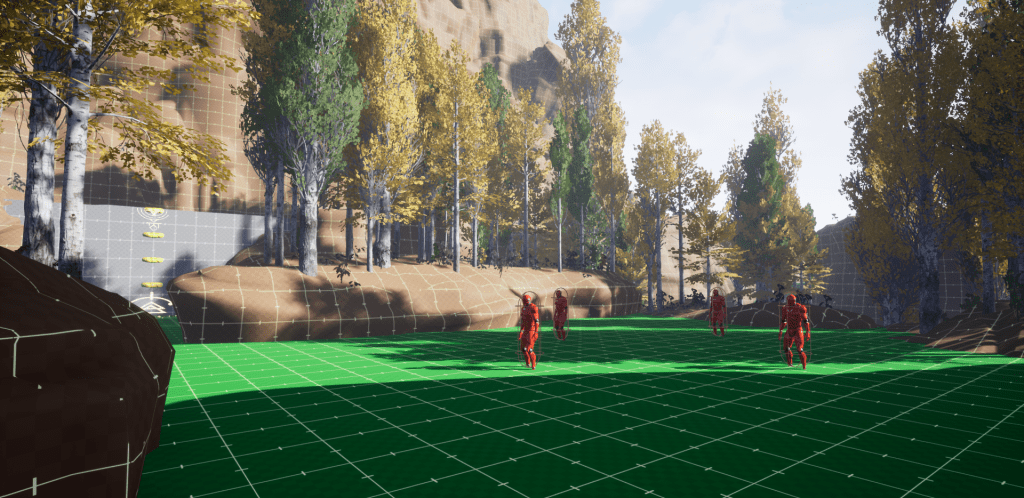
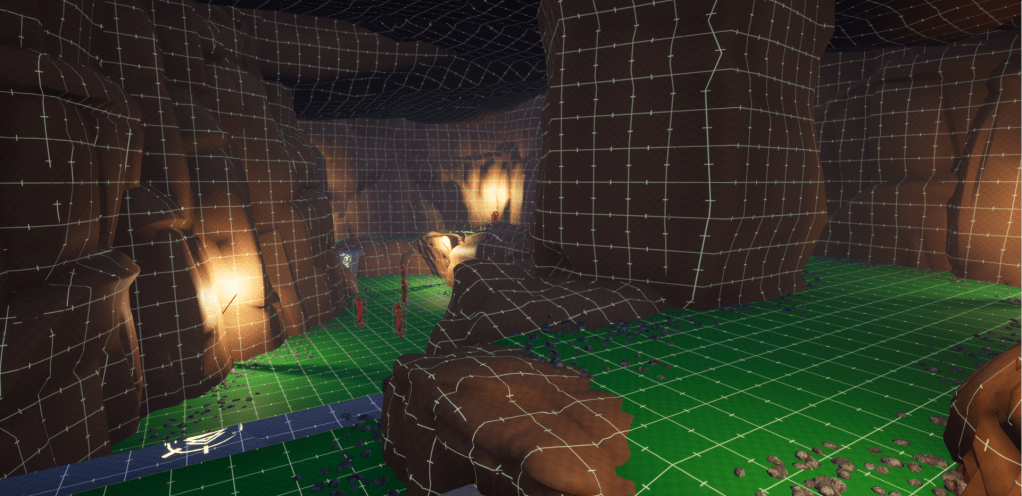

The pictures above are from my final blockout that I tested with, but this level was very much an iterative process with multiple passes. After finalizing the flow I wanted in the level on paper, I started my blockouts in Blender and then imported them to UE4, making adjustments as needed after playtesting them with friends and family. I generally knew which direction I wanted to go for the Forest and Cliff sections, but the puzzle in the Cave section gave me the most problems, so I needed to redesign that space more than the others. Below are some of my earlier blockouts, including previous layouts for the cave, which included more climbing, a bridge and upper level with a shortcut, and some tunnels with hidden rooms.


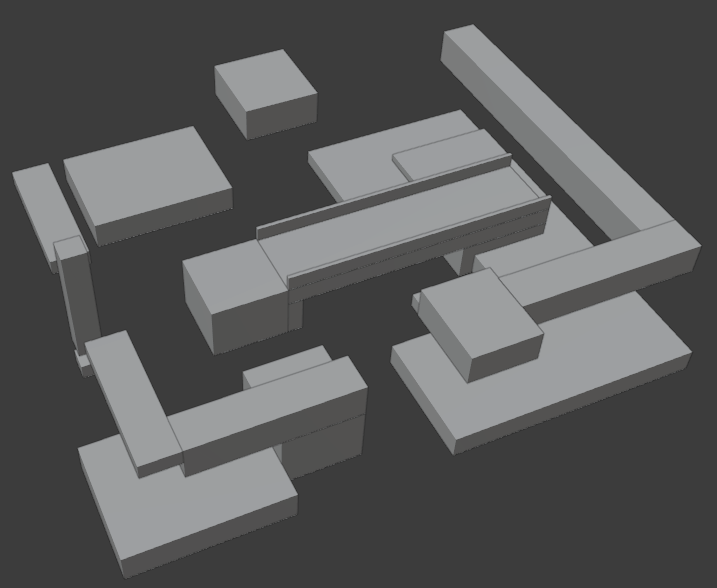
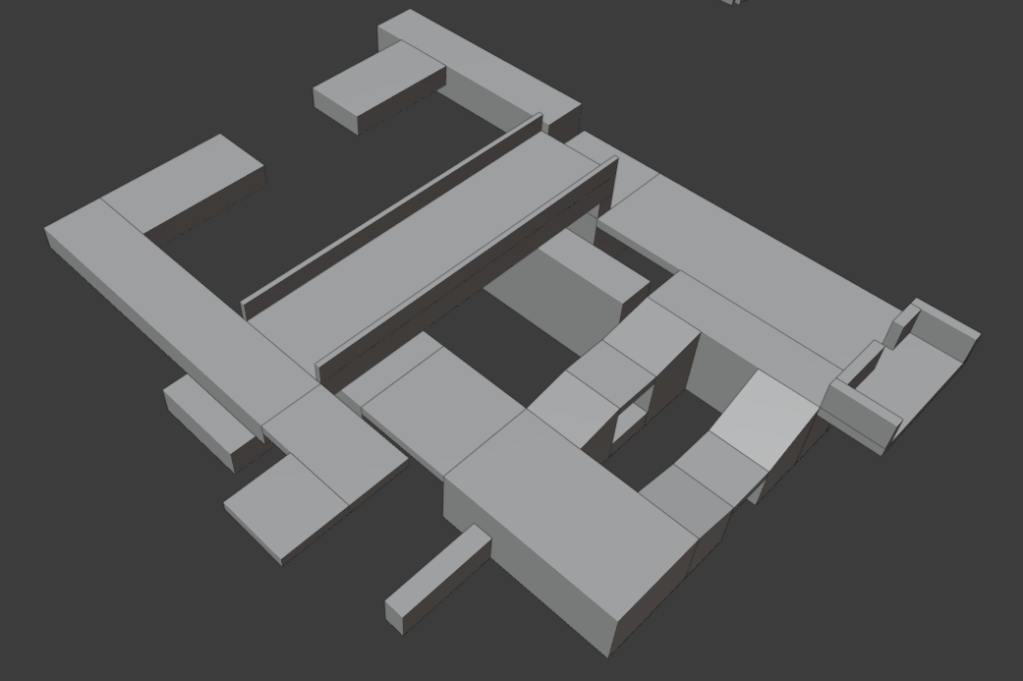
Everything I iterated on was driven by the feedback from playtesting. The process was a good lesson to me in simplifying things instead of trying to add more to fix the problems the player has. The second puzzle was something I learned to simplify rather than overcomplicate, though it can still be confusing to new players since it adds the push block out of nowhere. There were sections of the level that I similarly simplified, which ended up making the level flow better and led to less confusion for the player.
Polish
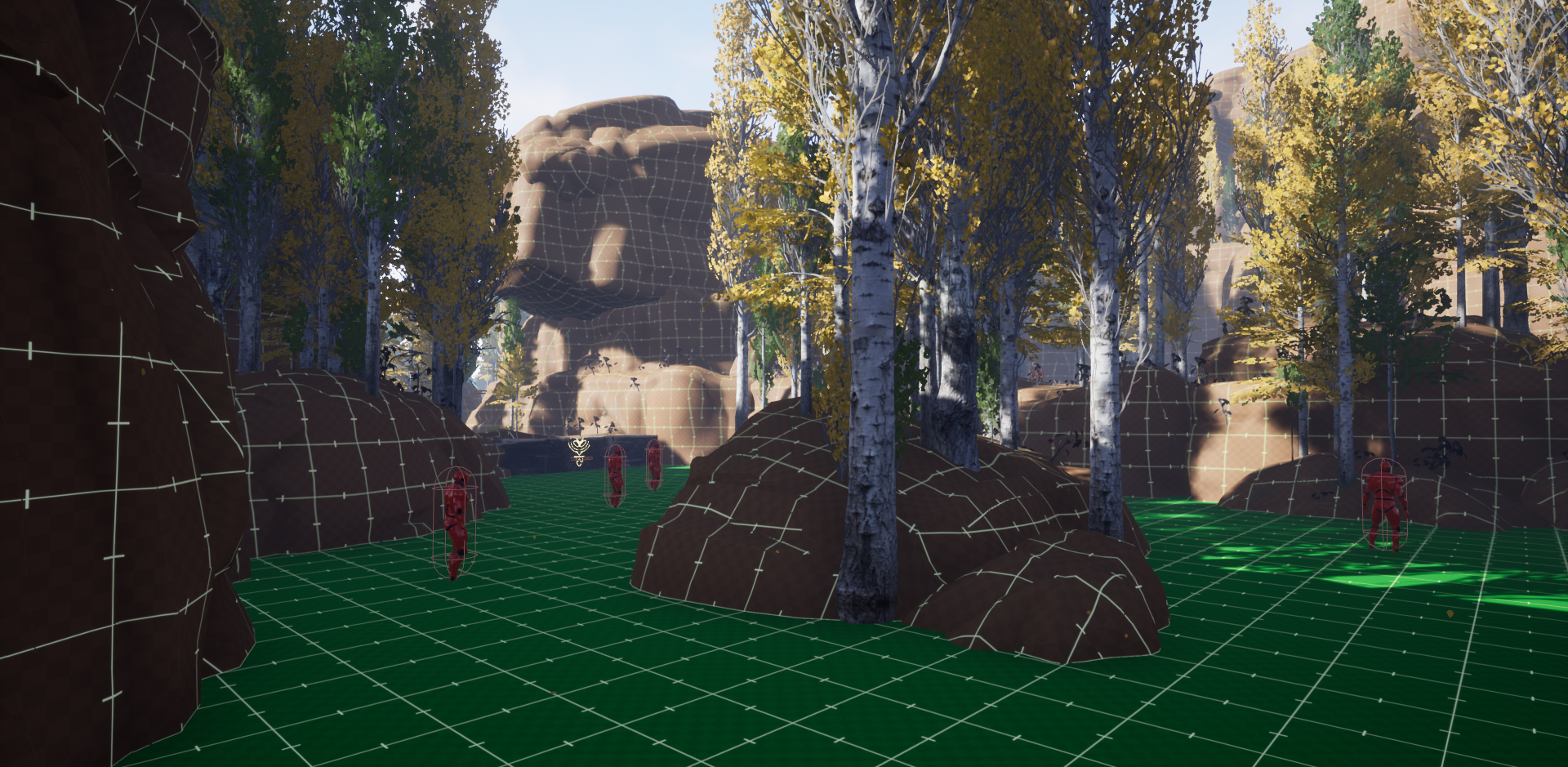
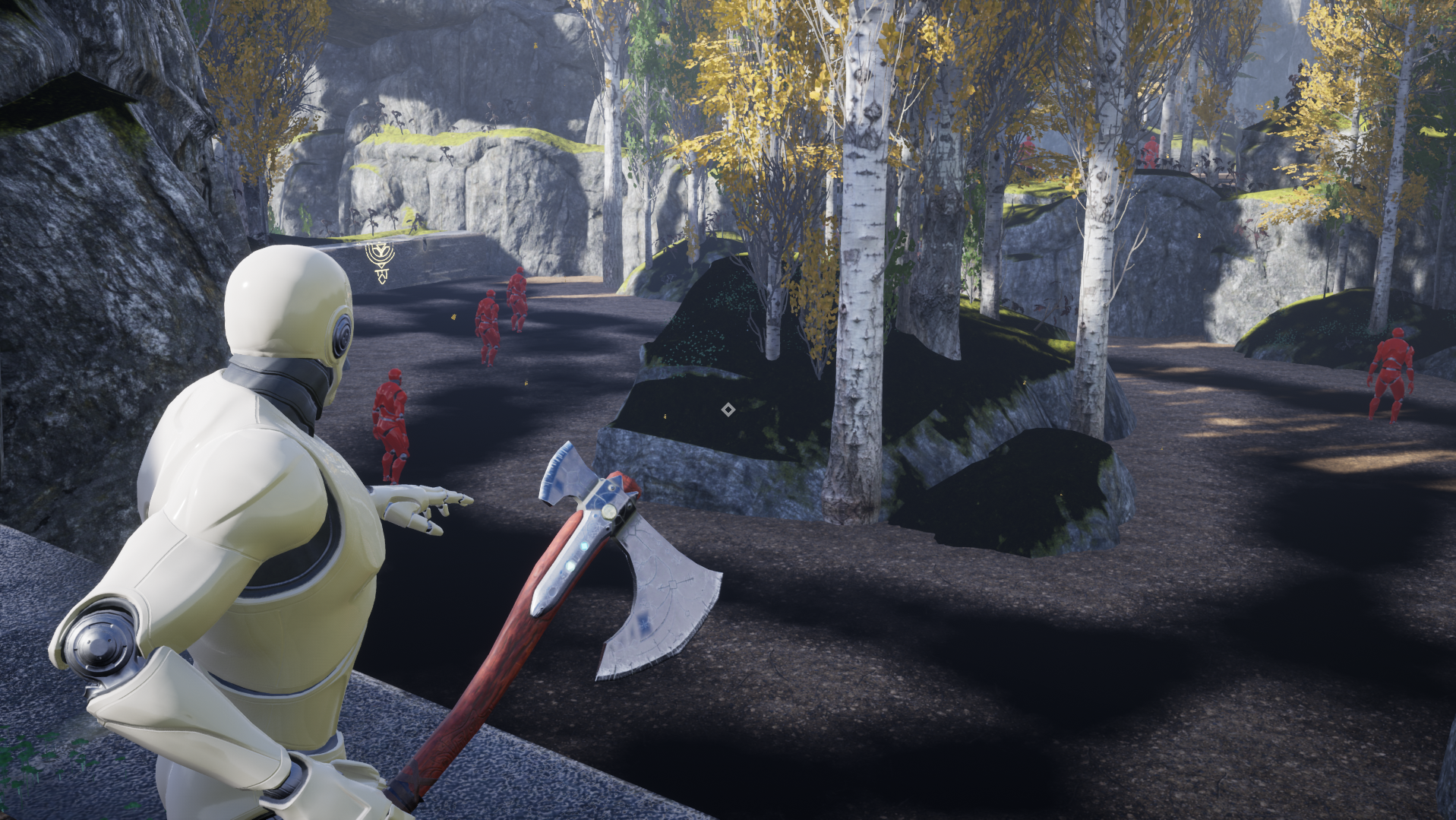
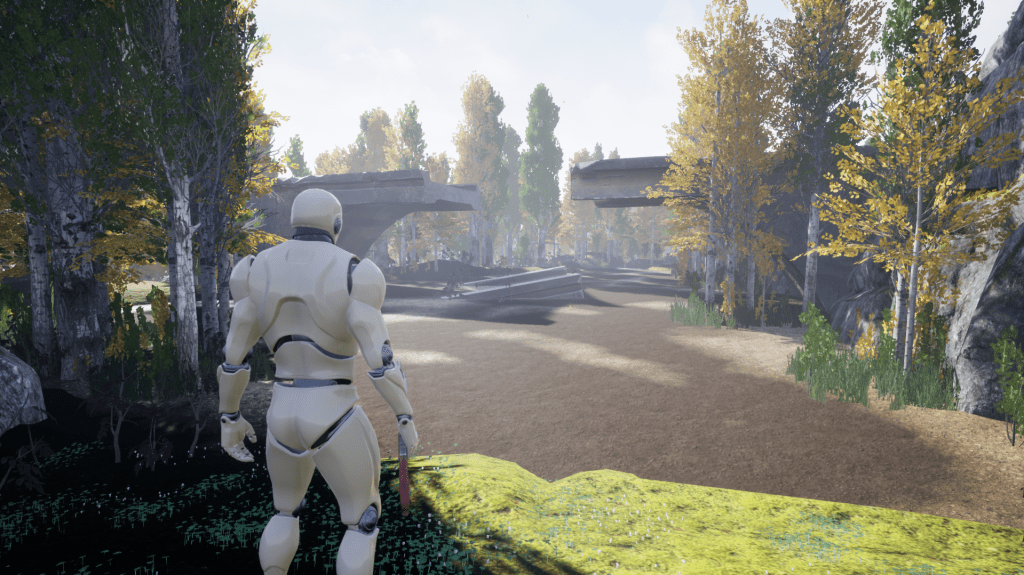
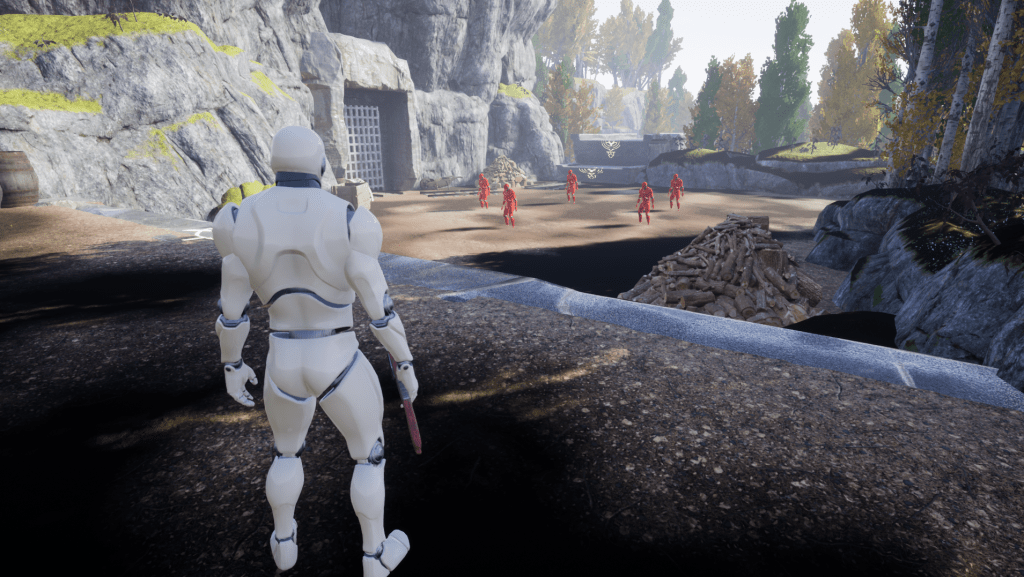
I found some of the models I needed from Sketchfab, including the fantastic Leviathan Axe model, and the rest I took from assets I already owned.
The enemies are there to show where I would place my combat encounters, but they don’t do anything except freeze when hit by the thrown axe and die/despawn when the axe is returned. I actually created a simple spawning and strafing behavior for my enemies, but I realized I was spending too much time on things that weren’t relevant for the purposes of the level, so I scrapped it.





 Patrick Lancaster